


The Weekend DIY Checklist: 5 Home Improvement Jobs Made Easier with the Right Tools

We've all got that one home improvement project. The paving that needs attention. The garden that's become a little too wild. The patio that hasn't looked properly clean since last summer. And somehow, every weekend, there's a reason to put it off.
With warmer weather arriving and the festive season approaching, October is a great time to start ticking those jobs off your list. The trick isn't necessarily working harder. It's making sure you have the right equipment before you start.
Here are five practical projects that can make a noticeable difference around your home, without turning every weekend into a construction marathon.
1. Give Your Patio and Driveway a Proper Clean
You might be surprised by how much dirt accumulates on outdoor surfaces over winter. Dust, mud, algae and general weathering can leave patios, pathways and driveways looking tired, even when they're structurally sound. A pressure washer can make cleaning suitable outdoor surfaces considerably easier than scrubbing everything by hand.
Start by clearing away furniture, loose debris and obstacles. Test the pressure washer on a small, inconspicuous area and use settings appropriate for the surface. Be particularly careful around damaged paving, loose grout, painted finishes and electrical installations. Once everything has dried, you might discover that your outdoor entertainment area doesn't need a complete renovation after all. It just needed a really good clean.
2. Reclaim the Garden Before It Takes Over
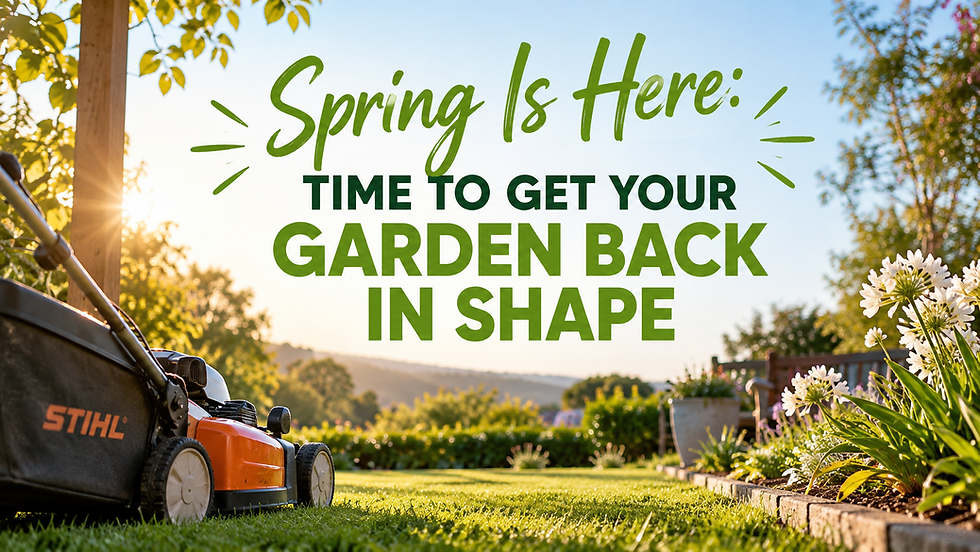
Spring growth is fantastic for your garden, but it can also turn a neat outdoor space into an overgrown jungle surprisingly quickly. Long grass, untidy edges and neglected sections can make the entire property feel less maintained. Depending on the size and condition of your garden, equipment such as lawnmowers and brushcutters can help make the job more manageable.
Before you begin, inspect the area for stones, wire, toys and other objects that could damage equipment or become dangerous projectiles. Wear appropriate protective clothing and follow the equipment's operating instructions. For larger properties, breaking the work into manageable sections can help you stay productive without rushing. A tidy garden doesn't just look better. It creates more usable space for enjoying the warmer months.
3. Finally Fix That Uneven Paving
Uneven paving isn't only an eyesore. Raised or sunken sections can also become tripping hazards. If you've been planning to repair a pathway, extend a paved area or create a new outdoor seating space, proper ground preparation is essential. One common mistake is focusing entirely on the paving bricks while overlooking the material underneath them.
A stable, correctly prepared base helps reduce movement and uneven settlement over time. Depending on the project, soil conditions and materials, a plate compactor or rammer may be suitable for preparing the foundation.
However, compaction requirements vary, so it's important to select equipment appropriate for the job. Take the time to get the foundation right. A beautiful paving job is only as reliable as the surface supporting it.
4. Make Concrete Work Less of a Workout
Mixing concrete by hand might seem manageable until you're halfway through the job and realise just how much effort it takes. For suitable home improvement projects, a concrete mixer can help produce more consistent batches while reducing the physical work involved. Whether you're working on a small non-structural garden feature or another properly planned concrete project, having the correct equipment can improve your workflow.
Preparation is key. Make sure your materials are ready, your working area is clear and you understand the required mix proportions before starting. Always follow the project's specifications, wear suitable protective equipment and clean the mixer promptly after use.
For structural concrete work, obtain the appropriate professional guidance rather than relying on general DIY advice. The goal is to spend less time struggling with equipment and more time completing the project properly.
5. Tackle the Bigger Jobs with the Right Equipment
Some home improvements go beyond basic painting, cleaning or gardening. Removing damaged concrete, preparing an area for renovations or breaking up an old surface may require specialised equipment. A jackhammer, for example, can be useful for certain demolition tasks, but choosing the correct size and type is important. Larger equipment isn't automatically better. Using a machine that's too powerful or unsuitable for the surface can cause unnecessary damage and introduce safety risks.
Before beginning demolition work, confirm the location of any concealed services and assess whether the structure can be altered safely. For more complex work, consult a qualified contractor. Knowing when to hire specialised equipment, and when to call in a professional, is part of planning a successful project.
The Smart DIY Question: Should You Buy or Hire?
Here's something worth considering before your next trip to the hardware store. Do you really need to own a piece of equipment you'll only use once or twice a year? For many occasional home improvement projects, hiring tools can be a practical alternative to buying them.
Instead of spending a significant amount on equipment that will eventually gather dust in the garage, you can hire a suitable machine for the period you need it. You also avoid finding permanent storage space for bulky equipment and taking on the long-term responsibilities that come with ownership. Of course, buying may make more sense for tools you use regularly. The best decision depends on the project, how often you'll use the equipment and the total cost involved.
Plan the Job Before You Start
The most successful DIY weekends usually begin before the first tool is switched on.
Take time to measure your working area, identify the materials you need and consider how long each stage might take. Check whether the equipment requires a particular power supply, fuel type, transport arrangement or additional safety gear. It's also worth allowing extra time for unexpected challenges. Outdoor projects don't always go according to plan, especially when Gauteng's summer thunderstorms make an appearance. A little preparation can prevent a straightforward weekend job from becoming a week-long headache.
Your Next Project Starts with Bwana
Home improvement doesn't have to mean investing in an entire workshop full of equipment.
With proper planning and access to suitable tools, you can tackle a wide range of projects more efficiently.
At Bwana Tool & Small Plant Hire, we understand that every project is different. Whether you're refreshing your outdoor space, preparing paving or planning a larger improvement, choosing the right equipment is an important first step.
Before your next DIY weekend, get in touch with Bwana Tool & Small Plant Hire to discuss your equipment requirements and available hire options.
Less time putting it off. More time getting it done.


Comments